
People Are Who They’re Allowed to Be, Company Edition
This article is the Company Edition and 2nd in the “People Are Who They’re Allowed to Be” series. This edition explains the effects of leadership latency and how to use management standard managing.
1st article, An Introduction, found here.
The Effects of Leadership Latency
Leadership latency is the name given to leadership’s slowness—to just about anything.
Leadership may be slow to provide decisions or approval. They may have good reasons to be slow, but the latency slows down the people who want to do the work.
Leadership may be slow to recognize trends. They tend to manage by rear-view-mirror reporting, so they don’t have the daily anecdotes that the frontline is fielding and combatting.
Leadership is also often the reason problems persist.
It’s here where we shine the light on the effects of leadership latency.
Many leaders I’ve worked for and with believe they have an empowered workforce that can prevent problems and come up with creative solutions.
Reality shows they often have little more than that belief. They want an empowered workforce but do little to empower it.
You see, when leaders wait for things to become urgent before taking action, they become teachers of The School of Arson and Firefighting.
By their own example, they demonstrate:
Effort should only be put forth when things get “bad enough.”
But who defines “bad enough”?
If it’s company leadership, the company is already behind market trends and customer desire. So, by the time a latent leader recognizes change is necessary, there’s already damage done.
If it’s left up to individuals, some make mountains out of mole hills while others ignore cataclysmic events because it’s “not their circus.”
In addition to the damage done to the company’s reputation and customer satisfaction, it does something more. This style of latency leadership teaches people that the small things don’t matter.
You end up with problems the sit, fester, rot, and grow. Then, you act surprised when things go wrong!
The cycle repeats.
People are who they’re allowed to be.
When the business owner is continually surprised by fires, they must recognize: their leaders are allowed to be firefighters that ignore small problems.
This allowance also opens the door to a variety of other issues:
Wildly different “companies” within your business
Silos
Drops and rework between departments
So much more
But how do you avoid creating a culture of firefighters?
Management Standard Managing
One solution is to implement management standard managing.
Most companies claim they have standards for their managers. And, to their credit, many of them do when it comes to metrics and measurable things for the business.
Very few, however, have anything that gives direction and uniformity to the people side of managing.
If you want strong leadership, address the people side of managing by implementing standards for all managers.
How do you want your managers to speak up about problems? How do you want your managers to treat the people they manage? What kind of problem-solving skills should they have? Is it your expectation that they only solve “big” problems? What kinds of behavior are you rewarding?
Some managers should be arrested for the arson they cause but are instead celebrated for the fires they put out!
In addition to The Healthy Company Framework, I advocate for a MAAP, or a Management Adherence and Action Plan. This MAAP should include the tenets you hold all management to, including yourself and your management team. They are the building blocks that establish strong leaders within your organization.
For example, if you want to have an organization that avoids pointing fingers elsewhere, you must hold your managers to a standard that uses evidence-based problem solving. What does that mean for your business? Does it mean, “Find the evidence and use it to incriminate others”? Or does it mean, “Find evidence and use it to report on what your contribution to the problem was and how you plan to fix it moving forward”?
It’s important to add, you as a leader have to recognize: people don’t always want to change.
You can’t always change people, but you can change people.
If the people you have working for you don’t line up with how you want your company to be represented, you can’t change who they are, but you can change their employment status at your company.
You can’t just believe you have the organization you want. You must do the work to ensure you’re teaching others what you believe.
This leads to the last point:
Lead by Example
You must demonstrate what you want. If you’re a CEO, you must also demonstrate holding your leadership accountable to the standards you profess.
Do you want your company to be one that’s responsive and puts out embers before they become fires? Then you must be responsive and put out embers before they become fires. You must demonstrate fire prevention.
Do you want your employees to be communicative about issues and inventive in their solutions? Then be those things when people bring problems to your doorstep.
Don’t be a latency leader.
Lead with intention.
After all, people are who they’re allowed to be.
And when you’re the leader at your company, you have the biggest say on how people affect your company.
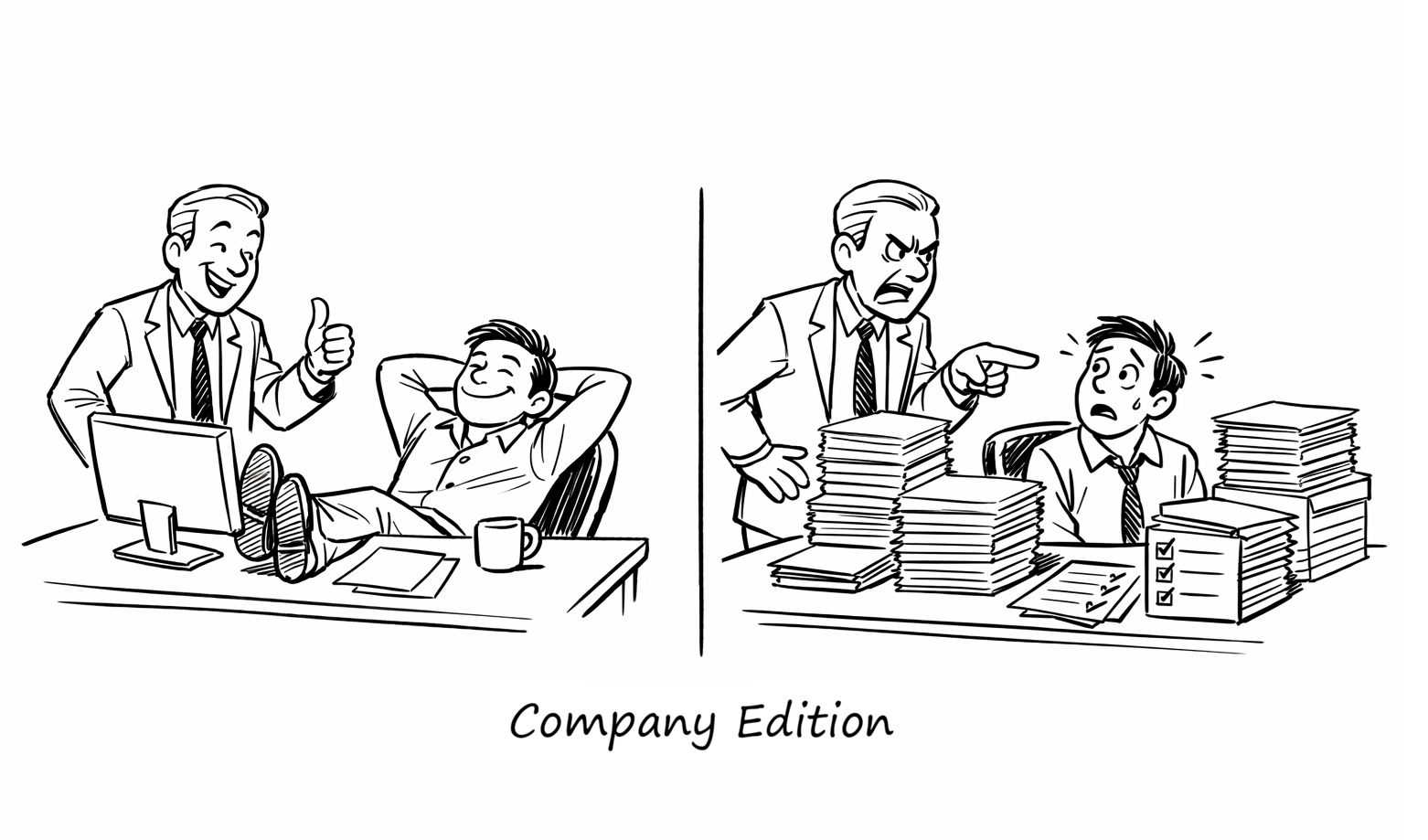
People are who they’re allowed to be. Are you the leader who tolerates misaligned rewards in your business?