
If you’re serious about leading your company well and rewarding good work, this is a must read!
This article is about the chronic thankers in your midst and how you might respond to them. It’s also about the superheroes in your business that might be taken advantage of—and what to do about it. And, since this article is a little longer, there is a quick summary at the end.
I say thank you a lot.
Being raised in the south, I learned to be respectful, say please and thank you, yes ma’am, no ma’am, yes sir, and no sir.
I’ve also been through a lot. I know what it’s like to not have people show up for you and protect you. I know what it’s like for the people who both say they love you and are supposed to love you leave you fend for yourself.
That changes you. One result is to create someone that says, “I know what it’s like to go without, and knowing that, don’t want others to feel it.” I hope I continue to live my life in this way!
But let’s put this in a different context.
If you’ve bought into a system that says, “If you follow these rules, you’ll be rewarded,” and then you aren’t rewarded, what’s the incentive to keep being decent? To keep pushing on?
For some, it’s because we believe that’s how one should be. We don’t want to play the game of politics and posturing. We believe the world is a better place when that kind of thing isn’t the main thing.
When you encounter these people, you can do a few things in response:
Be confused by it
Exploit it
Join it
Confusion
I’ve been met with confusion by many when I say, “Thank you!” for something that, apparently to them, seems obligatory. “Of course!” has become a more commonplace response to “Thank you!” in part because people are more and more thinking, “Of course, why wouldn’t I do this?” (Famously, Chick-fil-a uses “My pleasure,” instead of “You’re welcome.”)
But why the confusion?
To them, they think it’s an odd thing to say, “Thank you!” for. They don’t understand why I might be saying, “Thank you” for something that, in their mind, is something that is easy and obligatory. But, in my experience, nothing is obligatory. It’s not guaranteed that you receive the full value of what you paid for and were promised. People don’t have to do their job with a good attitude. People don’t have to be nice. Friends don’t have to have your back. Parents don’t have to love their children. I hope all of you are well loved and find confusion from those who say, “Thank you,” too much, but if that’s you, let me share this message:
When people say, “Thank you!” too much, they’re coming from a place of gratitude. They know what it’s like to not have those things. They are genuinely thanking you for doing the obligatory because they didn’t always have the obligation done for them.
Use this insight to help you see chronic thankers a little differently. It could very well be they don’t expect all you’ve come to take for granted.
Exploiters
That brings us to the second group: those who exploit the thankers. As we’ve just learned, chronic thankers tend to say thank you a lot because they know what it’s like to go without. Those with keen insight can discern this and may take advantage for their own gain. I had someone who was a deacon who bullied me. I asked them point blank one time, “Why do you keep doing this?” He simply responded, “Because it’s easy.” Wow. Think of the impression that made! To state the obvious:
Do not take advantage of people’s goodwill and past traumas.
This comes up in the workplace a lot, whether intentionally or unintentionally. Let me explain.
Think of the superhero everyone loves. Who is the person in your workplace that everyone loves to see, always does things for other people, and never complains about what they’ve been asked to do? (If it’s you, you’re probably a chronic thanker!) That person is probably taking on more than they really have the bandwidth for because they know what it’s like not to have help. They assume others are doing the same.
It’s here where the most malicious of people can take advantage of that person’s goodwill. They know this is happening and do it anyway so that they can get ahead. If you see this happening, be the person you want and speak up! Chronic thankers are often also recovering people pleasers who need help with boundaries.
It’s also here where many people in the first category, those who are confused by the chronic thanker, unintentionally take advantage of the person’s goodwill. If you’re untrained in looking out for others’ needs, it doesn’t occur to you that someone might be stretching themselves thin to help you out—even when you have the bandwidth to do more.
Us chronic thankers often learned: others’ needs come before ours. In many cases, we even mis-learned it as: others’ wants come before our needs! This has a curious effect on the chronic thanker: we develop a state of constant anticipatory vigilance. We notice not only what is happening, but what might happen if something goes left unchecked.
Take an easy example. You pour a bowl of cereal and finish off the milk. Do you write down milk on the shopping list? Communicate with the person who does the shopping? Or do you simply enjoy your bowl of cereal, leaving the next person milkless in the days to come? Hopefully you’ve learned to communicate milk is needed at the next grocery shopping trip!
Let’s apply this to a work example. You close out a ticket because you completed the troubleshooting steps—but the customer’s issue still isn’t resolved. What do you do? Do you communicate that more needs to be done, or decide your job is done because that’s all that’s been demanded of you?
Unfortunately, I think corporate America, due in equal parts to culture and wage erosion, winds up with most people doing less. They simply complete their list and close the ticket.
But what happens if you create a culture that joins the chronic thanker?
Joiners
Some naturally do more. Some abuse it. Frankly, neither is good! But what you join the thankers, you end up with a culture where everyone helps each other.
If you’re worried about everyone becoming a chronic thanker and burning out, keep reading—I address this concern a few paragraphs later!
The right way to implement this is by using a 20-60-20 approach.
The First 20%: Communicate with those who hand you work
The Middle 60%: How you do your work
The Last 20%: Communicate with those you hand your work to
First, The First 20%. You must communicate with those who hand you work. Do so in a way that makes sure you first understand what they do and why they’re asking something from you. What is it they need so that they can get their job done? This must first be understood so that you can then communicate with them what you need from them so that you can do your job. This “leading by example” way of communicating makes sure you understand where people are coming from and ensures you are equipped to hit the ground running. You don’t want to be in a position where you’re still trying to assemble the pieces that your predecessor, the one who handed you the work, should have done!
Second, The Middle 60%. You must know how to do your work. This sounds obvious, but it goes beyond knowledge. You must have adequate documentation about how you do your work, also. This matters because it allows you to take vacation, to grow your team, and to ultimately move on from your role, should you choose to do so.
Third, The Last 20%. You must communicate with those you hand your work to. Do so in a way that makes sure you first understand what they do and what they need to be successful. What is it they need so that they can get their job done? This must first be understood so that you can then understand how you should best hand off your work. This “leading by example” way of communicating makes sure you understand your work and ensures they can hit the ground running. You want to put them in a position where they can hit the ground running. You don’t want to be in position where your work comes back to you or you get blamed for causing things to slow down!
The unfortunate reality is: most people think this 60% is the entirety of their work! If you take this approach, you end up cutting off your left and right hand as work flows through your business. Without a left or right hand, it’s no wonder things fall apart! People are given incomplete work. They slow down because they’re doing more than they think they should. Priorities are wrong. Hand offs are messy. Rework blooms. Growth becomes unscalable and unsustainable. Customers grow angry.
But, when you adopt a 20-60-20 way of thinking and doing your work, you begin to create a culture of chronic thankers. Because what do you say when you start getting complete work handed to you? “Thank you!” because you know what it’s like when people hand you incomplete work. What do you say when your teammate has a quick guide that walks you through an issue you haven’t faced before? “Thank you!” What do you hear when you hand off complete work to the next person? “Thank you!”
For those concerned about everyone burning out: feat not! The 20-60-20 approach protects everyone from burnout. The answer isn’t, “Everyone should work harder!” (which sounds a lot like, “Everyone is in sales!” or “Everyone is responsible for customer satisfaction!”). The answer is, “communicate with the people left and right of you as you receive and handoff work, and respect what the other person does.” Communicating with those around is what helps you build healthy boundaries. It’s this communication practice that lessens the work for those stretched thin and holds accountable the ones who have been abusing the system.
This is how you build a culture of chronic thankers and end up beating your competition at every turn.
Summary
We talked about four types of people
Chronic Thankers
The Confused
The Exploiters
The Joiners
For the chronic thanker and (hopefully recovering) people pleaser, look for ways to set boundaries by continuing to communicate with those around you without also doing their job.
For those confused, look for ways to communicate where you might be handing off incomplete work or where you’ve allowed someone else to do what you should be doing. You might also be the chronic thanker’s best ally in learning how to instill better boundaries!
For those exploiting people, stop. Just stop. There’s no need for this. If you’re a manager and you see it, it’s up to you to make sure you hold your direct reports accountable!
And for those joining and looking to instill a better culture, welcome. It’s a wonderful way of being and working!
If you’re stuck on how to do this, let me know. As I’ve left various endeavors, people have always lamented my departure saying things like, “I’d follow you anywhere,” because of how I’ve led. I’ve codified my work into a repeatable, scalable methodology for all who want it. If you want this in your company, I can show you how.
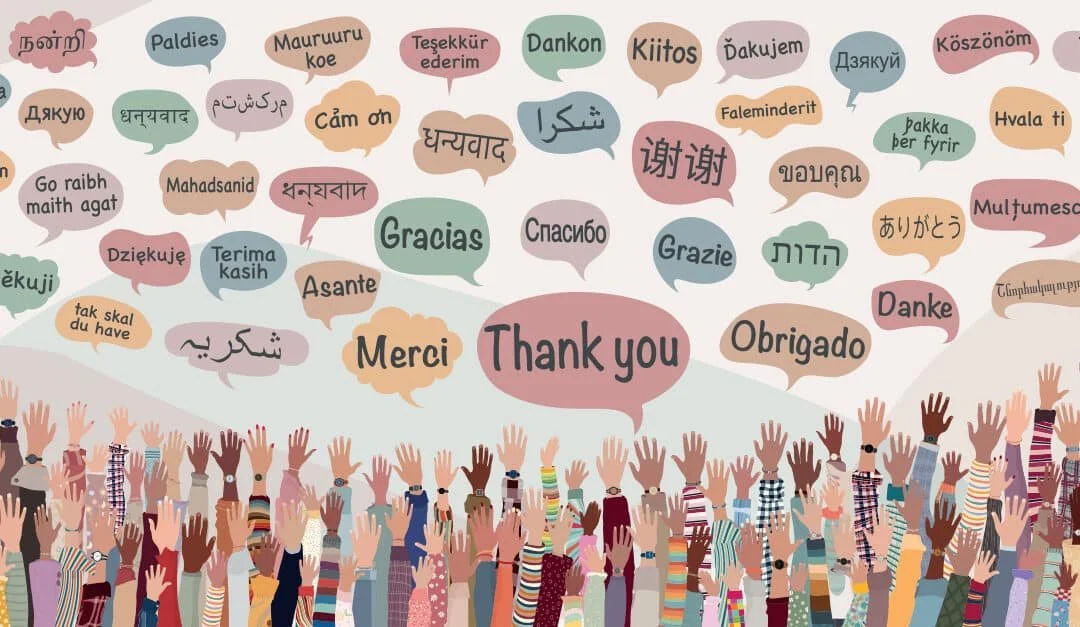
Saying “Thank You!” is powerful, especially for the mundane. It’s how you prevent callousness and stave off resentment in a world that constantly demands more from you.