
How Owning Your Failures Heals Your Business
There’s a leadership adage that talks about how poor leaders often claim credit for success and blame others when things go poorly.
The better approach, of course, is to look out the window to distribute success and in the mirror when owning failures.
Let’s look at the second aspect, owning failures, from a few different angles:
The negative impact
How to own “failure”
The positive impact
The negative impact
The negative impact of not owning your failures is immense.
I’ve been part of several contentious business conversations due to a company’s self-inflicted errors. Many of these were handled as well as they could be because the people involved had the common goal of solving the problem and owned up to their contribution to the problem.
But, when a certain individual was involved—let’s call him Jack—failures were not owned. When Jack was involved, you could guarantee a few notable differences:
The blame game.
Instead of trying to fix the problem, Jack led with how everyone else contributed to the problem. He was quick to rank their failures, too. He’d go around and talk about how every other person in the room failed (and often someone not in the room), and if those failures hadn’t happened, there wouldn’t have been an issue. He wouldn’t have made any mistake if it weren’t for [all these other people]. Perhaps, if the problem was severe enough, he’d finish with his now trivial contribution.
This resulted in him ultimately starting to blame the customer! You won’t have any customer problems if you don’t have customers. The problem, of course, is that you also wouldn’t have a business!
Resolution delay/avoidance.
When Jack was involved, it was almost impossible to reach a resolution. Phrases like, “I’m not sure that’s the best solution,” and, “We don’t have enough data to make a decision,” were the norm.
This resulted in no decision making during the meeting. Most often, the issue would be overshadowed by the next big thing, and nothing ever changed.
The forest for the trees.
To finish things off, Jack was an expert at making sure he was right. Did it matter that he burned down the forest to make sure his one tree stood upright? Not at all! He cared more about doing things right than he did about doing the right things.
Read more about The Forest for the Trees!
What does all of this do?
When you keep people like Jack around, you will continue to face the same problems over and over.
Whether it’s lost business, high turnover, or reduced market share, the impacts of one failure will continue to happen unless they’re healed.
The blame game makes the meeting about creating a winner: the person who is either blameless or who failed the least. A stack ranking of blame might make some people feel better, but it does very little to solve the problem or prevent it from happening again. It also can devolve into blaming the customer—the very people who pay your company money!
The blame game segues to the second point of resolution delay or resolution avoidance. Blaming others, ultimately, burns your most limited resource: time. Blaming others takes time away from solving the problem. Jack, of course, wasn’t interested in solving the problem. He cared more about looking better than his peers. After all, you don’t have to be blameless. Others just have to have more blame than you.
When you combine this with the slippery slope of blaming your customers, you begin to think you just have to have less blame than those around you. What does this do to your company? I like to say that if your competition is a flaming dumpster fire, then you can be better than your competition by being a regular dumpster. Not exactly a high bar of excellence!
In the end, Jack missed the forest for the trees. He didn’t care about fixing the problem. He cared about being right. This meant he was policing others. If he had time to police others, why wasn’t he spending it making sure his team was doing a better job?
I want to make it clear that Jack’s attitude had a far-reaching impact. If you have a Jack working for you, and they continue to act like this, you don’t have a Jack problem. Jack is a symptom. You have a culture problem. A healthy culture wouldn’t allow Jack to blame others, avoid resolution, or avoid the big picture. Keep this in mind as you continue reading!
So, what do you do?
How to own “failure”
To start, a business “failure” is not synonymous with a moral failure. This is important to call out because many people act as if they are one in the same.
Yes, business failures can be a moral failure (embezzlement, fraud, etc.). But most of the failures that happen in business are the day-to-day snafus that happen because we’re all humans doing work with other humans. I believe that’s why Jack behaved the way he did. I think he saw failures at his job as some sort of reputational or moral failure. While some bosses may equate the two, I do not. This is important to understand as I tell you about how to own failure.
Own failure with three questions:
What action did I do (or not do) that caused this outcome?
Why did I take the actions I took?
What could I have done differently that would have changed the outcome?
To own failure, start by asking:
What action did I do (or not do) that caused this outcome?
List out what you did that caused the failure. Did you skip your checklist? Did you make an assumption about the information you received? Did you act too hastily because you were stressed about something else? In this step, just focus on the actions you took, including the ones you didn’t take. As best you can, don’t include people at this point. It’s not that [so-and-so] gave you bad information [blame], it’s that you received bad information [information].
Next, ask this follow up question:
Why did I take the actions I took?
Here is where you can start to explain “why” something happened. Did you take action based on the information you had, but the information you had was insufficient because someone didn’t their job? Make note of that. Do this for every action you listed out.
Finally, answer this last question:
What could I have done differently that would have changed the outcome?
Answer, for each of the actions and whys, what action you could have taken. It may be the failure of your coworker who gave you incomplete information, but perhaps you could have verified the information. Did you act in haste because you were stressed? Next time, you know to stop and reset before handling a new situation.
This is incredibly simple, and I think that’s why most people skip this.
Simple can be effective!
The positive impact
Imagine a room where Jack took this approach. Instead of blaming others, he would have brought three key elements:
What he did that caused his contribution to the problem
Why he acted the way he did
How to prevent it from happening again
Put simply, Jack could have been the one to set the precedent of owning his contribution to the problem.
Whether you’re 5% or 95% responsible for the problem, you are 100% responsible for your contribution.
When everyone brings this to the table, you end up with a room full of people who want to solve problems, change for the better, and work together towards a common goal.
The Healthy Company Framework calls this Self Healing. You, yourself, can bring this level of healing to your job and your company. It teaches you to solve problems by both reacting to the immediate problem and by proactively preventing it from happening again.
What would it mean to your business if people adopted this?
In my experience, it resulted in
98% reduction in contract errors
65% reduction in processing time
3-5 times speed to market of new ideas
When you create a culture of problem solving that starts with people owning their contributions, you can systematically implement change with results that beat your competition and help you and your coworkers have a more enjoyable work experience.
This translates to better internal processes that save you money. Customer satisfaction increases because you don’t miss the same things twice. Employees work together to make the environment better for everyone who interacts with your company.
If this message resonates with you, I encourage you to read The Healthy Company Framework. Talk with me and see how Company Connections will help your business.
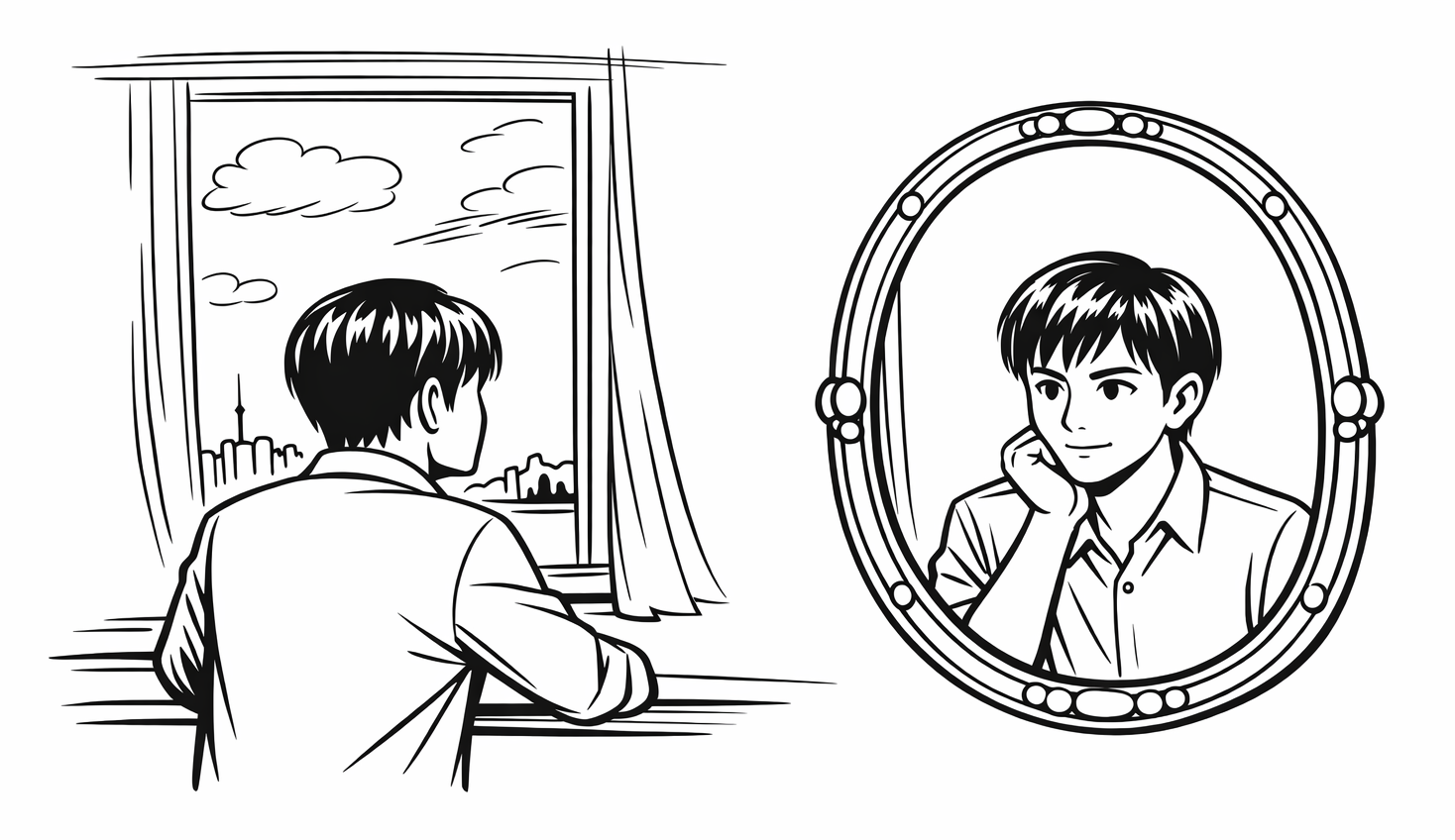
Look out the window for success and in the mirror to own your contribution to business problems—and watch it transform your business!