
Achieve Your Goals by Owning Your Impact
This article reveals how you may be confusing impact versus results, the consequences of oversight, and how to own your impact.
Baseball. America’s pastime.
I’ve been watching a lot more baseball this year with a focus on the Dodgers (three-peat, maybe?!) and, growing up loving Chipper Jones and Greg Maddux, the Braves.
It’s been fascinating to see just how often hits don’t translate into runs due to runners left on base.
It got me thinking about how a bunch of single base hits often don’t have much of an impact on the result of the game. Sure, these are the activities a good offense needs to win a game, but it’s not the same thing as having an impact that leads to winning games.
The leading example of this is a game from 1932 where the Cleveland Indians lost to the Philadelphia Athletics 17 to 18, despite having 33 hits to the Athletics’ 25.
It got me thinking about a player’s impact versus the results.
Impact versus Results
Impact: the strong influence of one thing on another: a significant or major effect.
In my own conversations, people sometimes confuse “impact” to mean “the result I want.”
Those who lead with victimhood start with how outside forces impacted and impeded their ability to get the result they wanted.
Some get closer to the truth and say, “These outside forces affected or impeded the result I want.”
Better business leaders understand, “This is the impact I’m having on my business results.”
Few, however, lead with the awareness,
“My impact affects the people who run and manage my business.”
Many business leaders are well-trained in understanding their impact on the business. They are paid to look at the big picture items such as profitability, revenue, headcount, and the like. They understand the strategic steps they must take to ensure their business can keep making payroll.
Managers and frontline employees are often taught to manage up and make sure the ‘boss’ has what they need. This coaching is a healthy part of making sure the business runs well. You don’t want silos. You don’t want to make decisions in a vacuum. You must take your head out of the sand, see the big picture, and understand why certain decisions are being made. It’s this focus that allows you to anticipate future difficulties and respond in a proactive manner.
Unfortunately, it’s here where many businesses unintentionally or even coach people to stop.
What they miss is their impact on people.
It’s this missing element that causes so many to confuse impact with results. They don’t realize that they are abdicating their impact on their people, and that it’s those people who ultimately help deliver the value that drives the results you want.
The Consequences of Oversight
“Leaders who don’t listen will eventually be surrounded by people who have nothing to say.”
“Don’t worry about the impact to Margaret, we’ve got to make sure we hit our quarterly numbers!” might be something said by a business leader to a manager. By all rights, the manager is simply raising a personnel concern.
Many leaders mistakenly view legitimate personnel concerns as obstruction. “This manager isn’t taking the health of the company seriously.” Even I’ve been chastised by top brass, “If I really cared about the company, I would do what I’m told.” This, of course, is a laughable statement for anyone who knows how much I care about what I do.
The people who care the most are often the ones who speak up about the impact of change. They are your canaries in the coal mine. Silencing the people who raise concerns will destroy your business.
It may not be immediately, but it will happen. And this is what happens when you don’t own your impact:
People stop speaking up
Bad ideas persist
Complacency is rewarded
People stop speaking up. I’ve learned it only takes one bad reaction for people to never speak up again. What’s scary about this is that the further away you are from the front lines, the longer it takes for bad news to reach you. When you implement a bad change, it takes 5 times longer for you to feel the effects. What does this mean?
Bad ideas persist. Because you’re the last to find out about things, bad ideas tend to stick around longer. “That’s the way we’ve always done it,” starts to become the company culture, leaving you flat-footed in a world where startups are a dime a dozen, trying to take you down. When you let bad ideas persist and ignore those who want to fix them, the unthinkable starts to happen:
Complacency is rewarded. Complacency is one of the ultimate killers of business. 20 years ago, smartphones were new. Now it’s almost impossible to exist in the business world without one. Think of the technologies that existed 10 and 20 years before that. What was once novel grew to become mandatory (e.g., email). Requirements such as faxing now make you look antiquated.
Ultimately, all this stifles innovation, kills market share momentum, erodes profit margin, and prevents you from achieving your business goals.
But, there is a better way.
Own Your Impact
In The Healthy Company Framework, I codified the third principle as Know What You’re Doing. I call this approach the 20-60-20 way of thinking as it helps people understand where their work comes from and who they give their work to.
This helps people own both how they’re impacted by others and their own impact on others. This is what starts the shift towards putting out and preventing embers rather than waiting for and putting out fires.
The 20-60-20 way to Know What You’re Doing is what heals your strategic approach.
If you’re reading this, you’re great at your job. You know what to do for the heart of your role. But this is only the 60%. You must also be good at the preceding 20%. Understand the demands that cause you to make decisions. Understand where your work comes from and the pressures those people are facing. This then gets you 80%.
To become a complete professional, you must also include the last 20% that is communicating with and understanding the impact on those who report to you. It’s not enough to just do your job. It’s not enough to just understand where your work comes from and why it matters. You must think about how well you’re handing off your work to others so that they, too, have the greatest chance of success. You must ask, “How do you like to receive your work so you’re fully equipped for success?”
When you do this, you gain several positives:
You get more insight
Change lasts
Change becomes easier
You get more insight. When you inform people about change and listen to their feedback, you gain more insight. More insight leads to you making better decisions. What does this mean?
Change lasts. Change is cheap. Lasting change, change that sticks, is powerful. When you work with the people who report to you, you build buy in and consensus as you course correct the ship that is your company. What does this do?
Change becomes easier. When you lead with curiosity, inform others, and listen with the intent to understand (not to be understood), you create a culture of communication that moves together. This type of trust puts you in a position to better achieve your goals.
So, whether you’re looking to improve profit margin, increase revenue, gain market share, create better products, increase customer satisfaction, or reduce burnout and turnover, the 20-60-20 approach to Know What You’re Doing will work. It’s the secret real leaders use to own their impact and create lasting change.
I have a long history of and am an expert in implementing change that people want. Company Connections can help you do the same. Whether you’re looking for leadership training, company-wide deployment, or one-on-one coaching, we’re here to help.
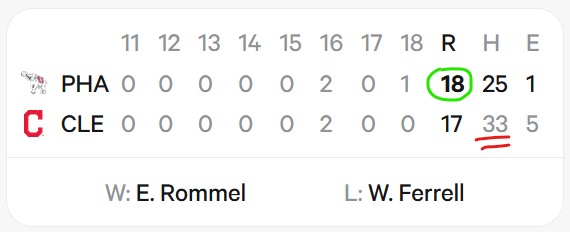
Hits don’t always result in runs that win the game. What activities are you confusing for results?